The Man Who Stayed in the Middle of the Desert
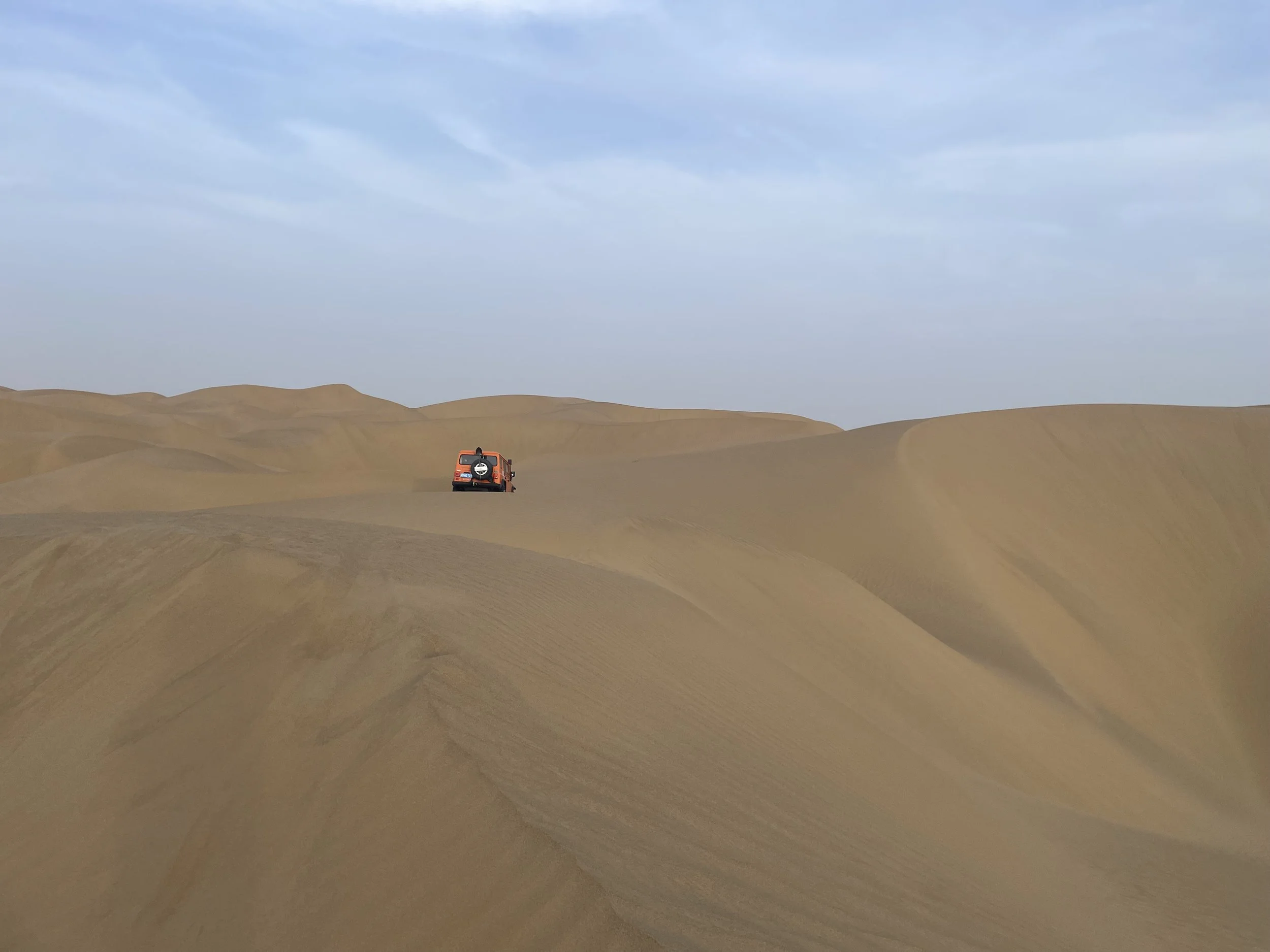
From Ruoqiang continuing westward, gradually building a quiet sense of anticipation. We are traveling along the southern route of the historical Silk Road. To our left, the Kunlun Mountains rise as the natural boundary of the Tibetan Plateau. To our right, the desert opens endlessly. For centuries, caravans followed this same logic. Routes ran along the northern or southern edges of the desert, close enough to the mountains to secure water, settlements, and places of rest. Between north and south lies more than one thousand kilometers of sand.
For the ancient caravans, it was never an option. Today, three roads cross this vastness. Zooming deep into the map, tracing one of these lines, we notice a small village almost exactly in the center of the desert. A place with a bookable accommodation. Tazhong. Something must be there. That something becomes our destination for the day.
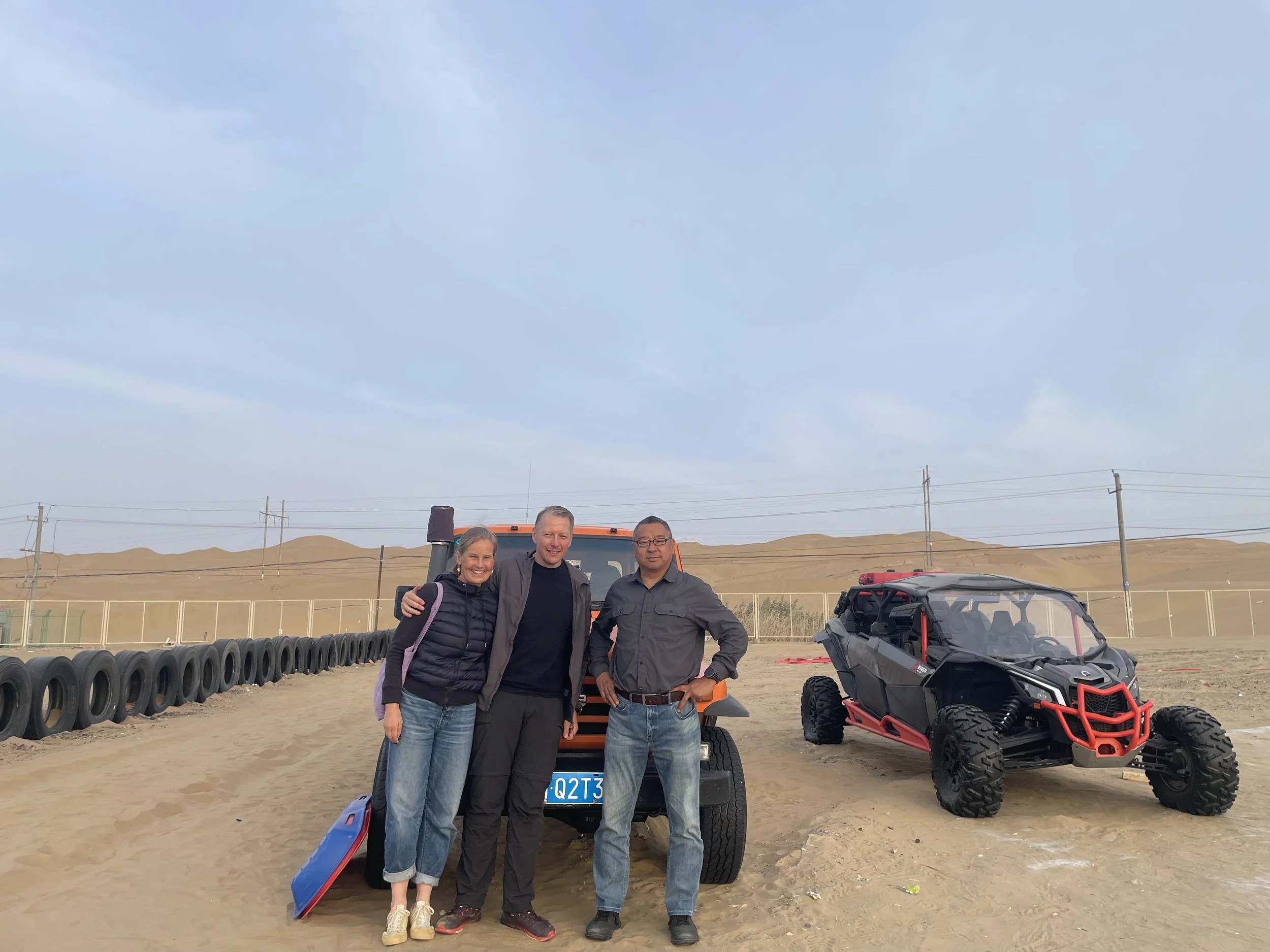
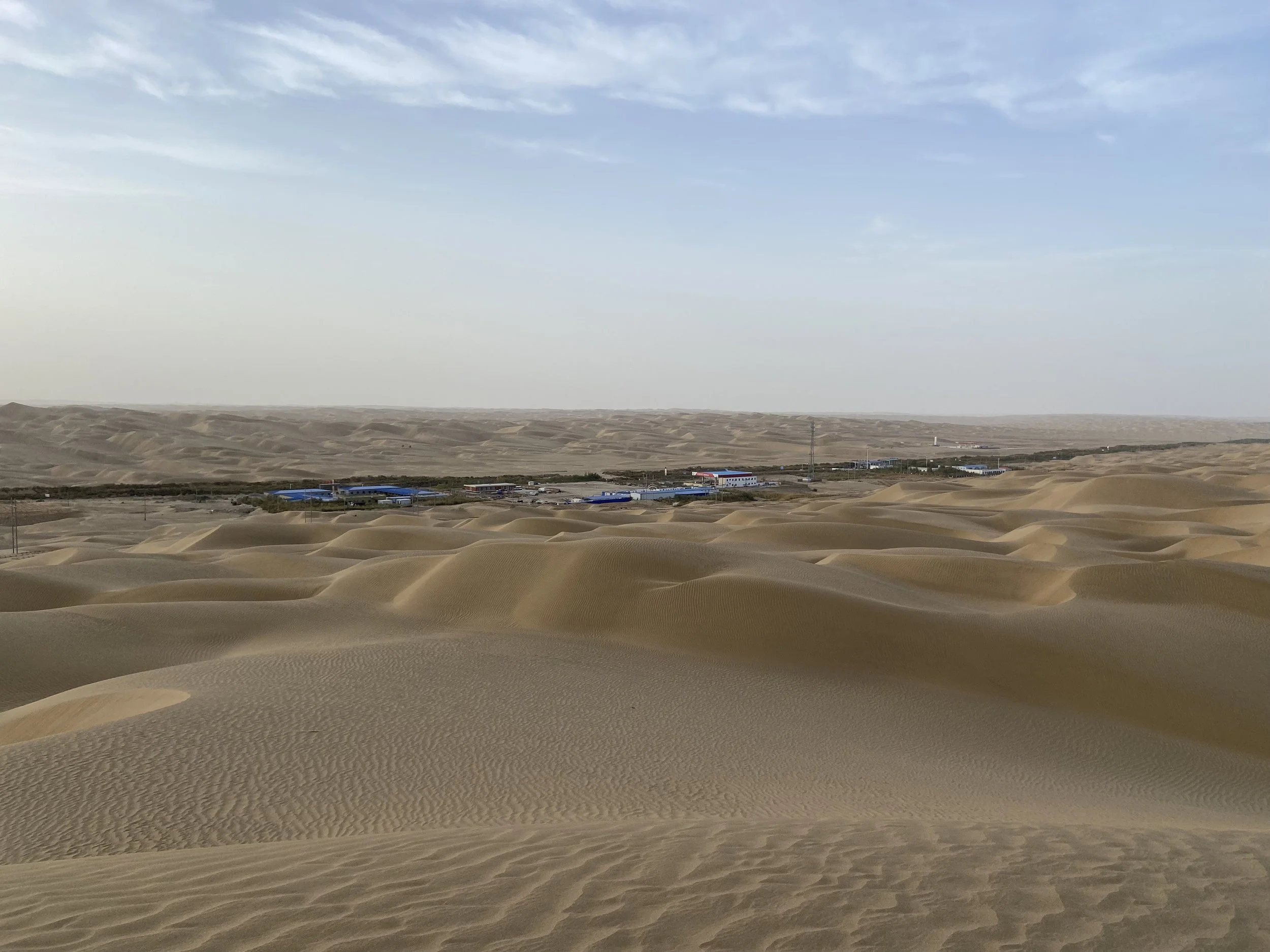
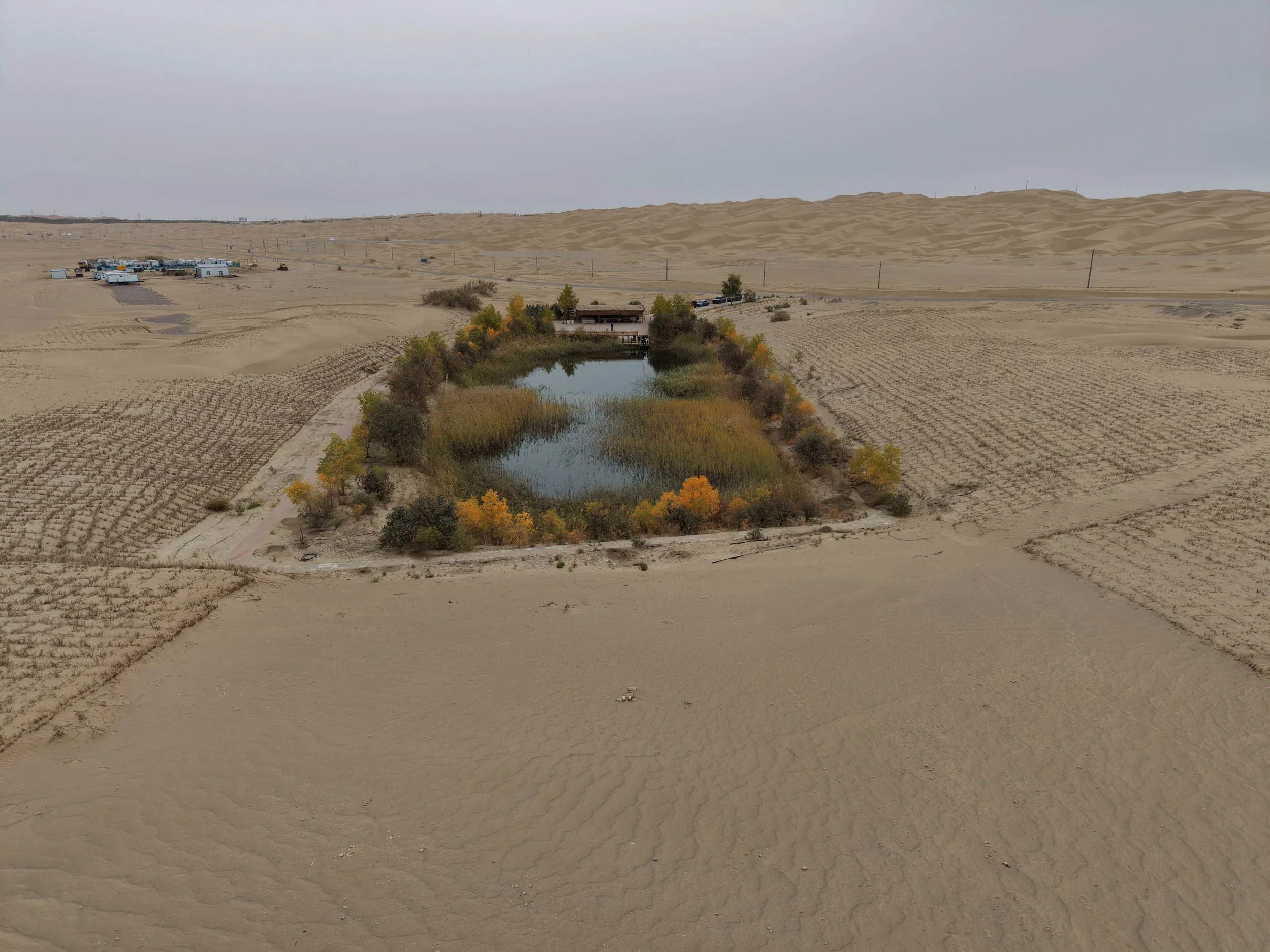
After hours of driving through a landscape that slowly strips away any sense of scale, we arrive. Tazhong reveals itself quietly. A fuel station. Two small eateries. And one homestay. This is where we meet Mr. Zhang.
Mr. Zhang arrived here twenty years ago as an oil drilling worker. Back then, the desert promised opportunity. When the oil was gone, most people left. He stayed. Over time, he began to build a small offering for the few travelers who make their way into the heart of the Taklamakan Desert. A place to sleep. A warm meal. A conversation that stretches into the night.
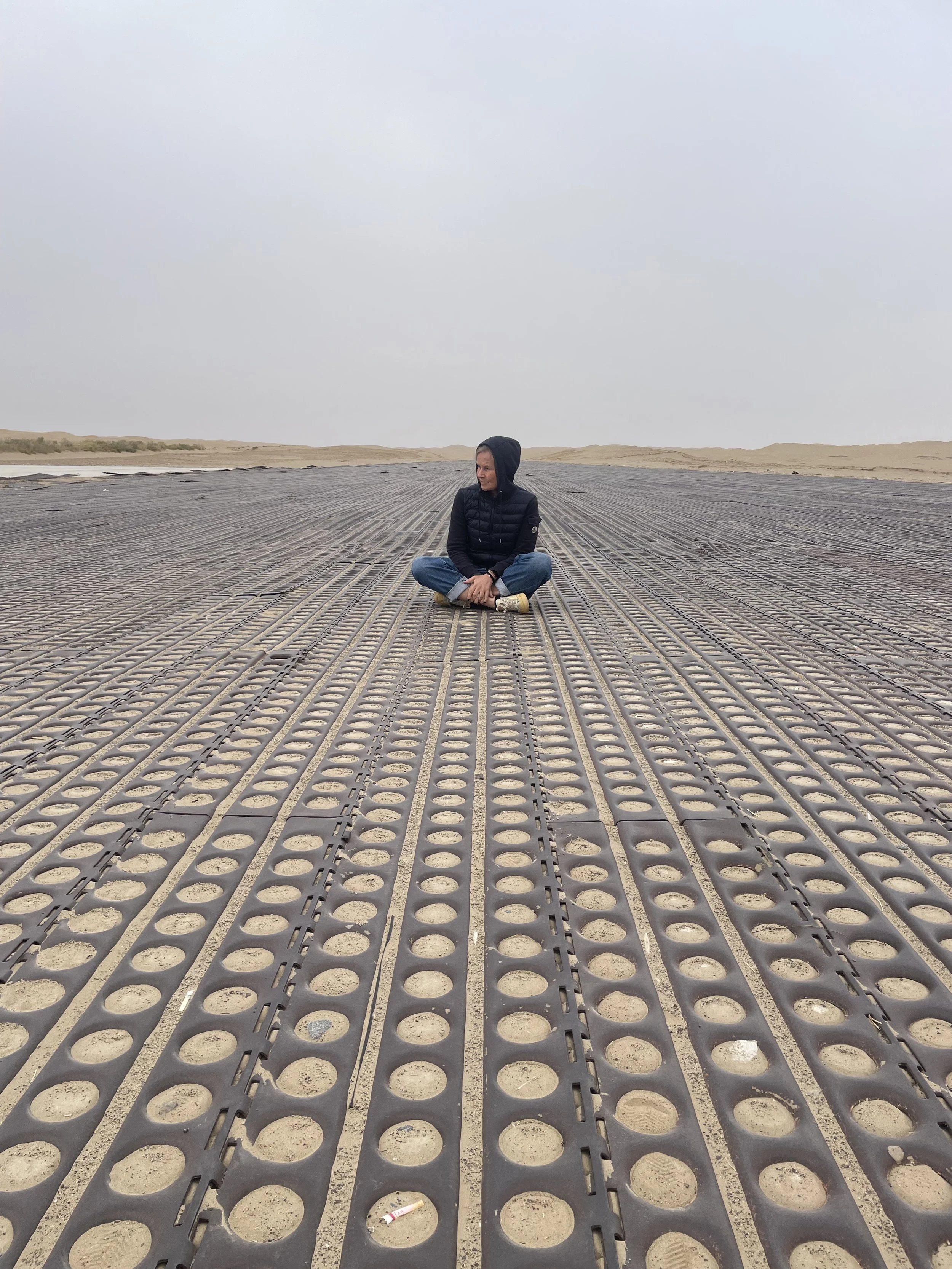
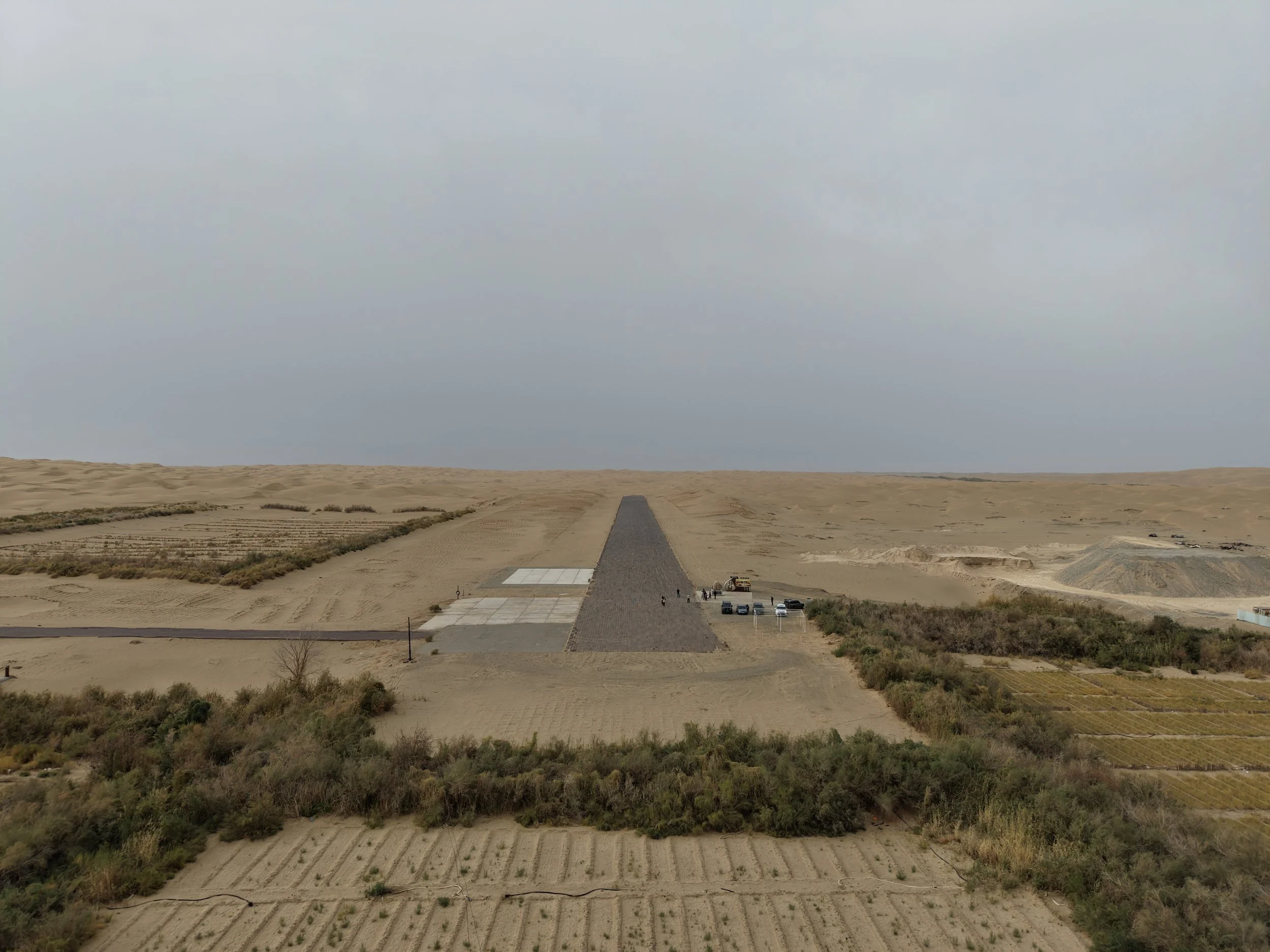
Mr. Zhang is also the founder of the Taklamakan Rally. A route of roughly five hundred kilometers, driven without tracks across open dunes. What began as a personal experiment has grown into a known challenge for experienced desert drivers. He guides visitors to abandoned drilling sites and to an improvised airstrip made from old metal plates of American origin, laid directly into the sand.
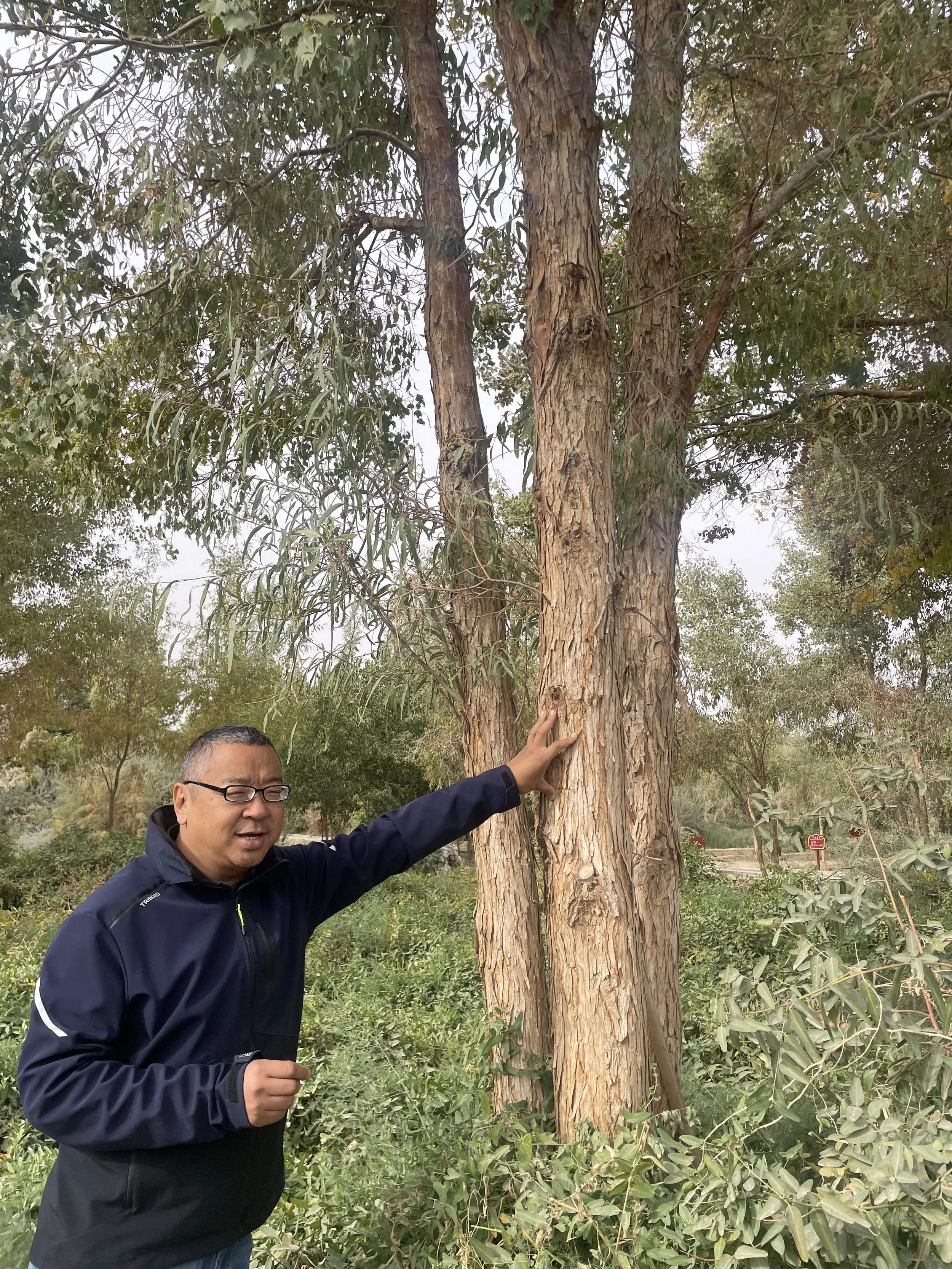
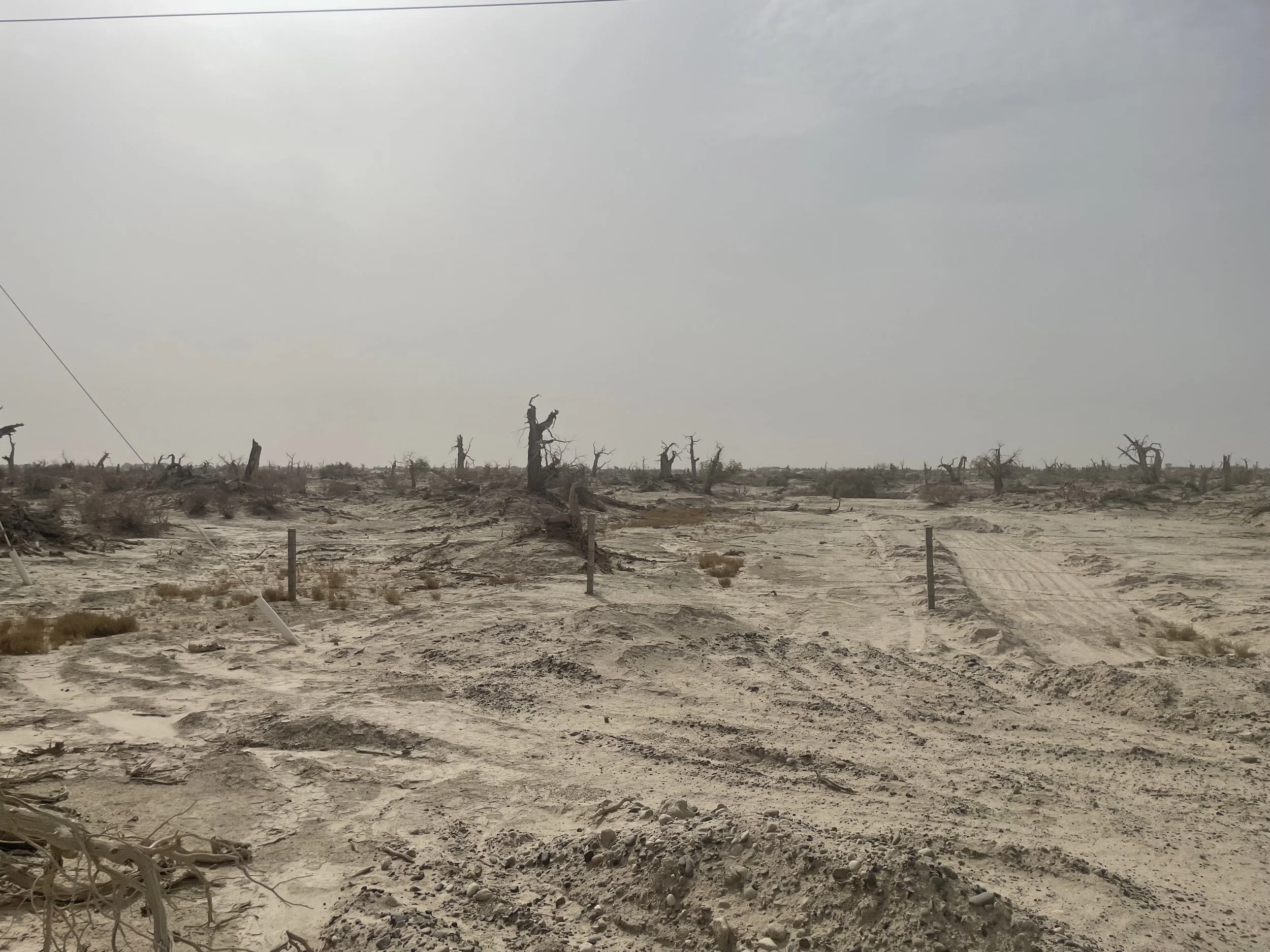
Over the years, other layers have joined this unlikely settlement. A biological research station studies desert afforestation. Some of the trees planted here send their roots more than thirty meters deep, reaching hidden water far below the surface. Life, in its patient form, continues to adapt.
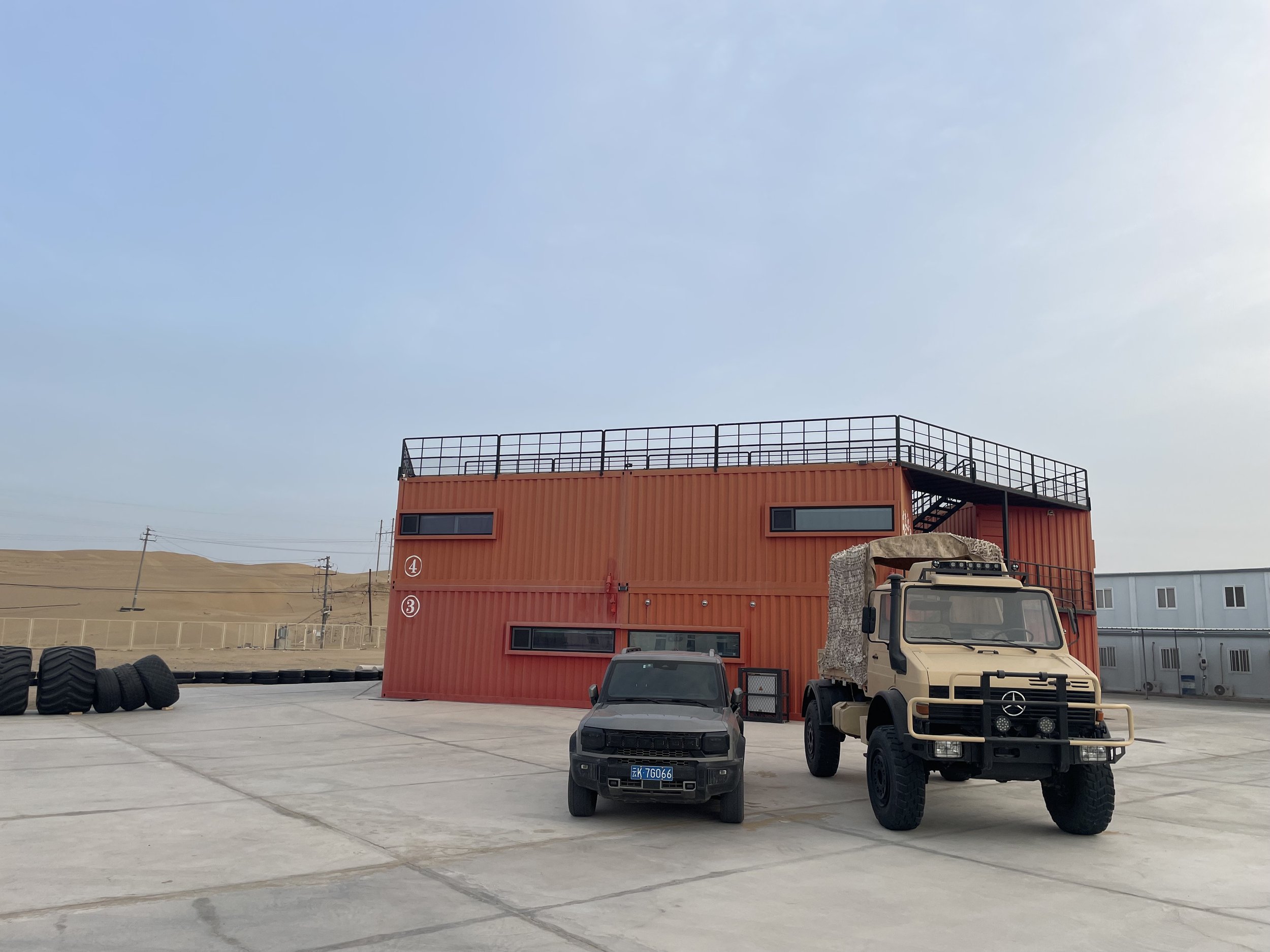
We spend the night in converted truck containers. In front of us stands an impressive collection of desert vehicles, carefully maintained by Mr. Zhang and one employee. At sunset, the machines cast long shadows across the sand. The silence feels complete, not empty.
Mr. Zhang does not describe himself as a pioneer. He speaks calmly, with a sense of routine shaped by years of sandstorms, isolation, and slow progress. His story is not about conquering the desert. It is about staying. About building something small and resilient where few would choose to remain.
At China Serendipity, these are the encounters that stay with us. People who choose presence over transit. Who add meaning to places that might otherwise remain a dot on a map. Traveling through Western China with them in mind turns distance into depth.
Tazhong is not a stop you plan for comfort. It is a place you remember for clarity.
Related Tours: Xinjiang Desert, Xinjiang Expedition, Xinjiang Kahsgar & Pamir